
Health
News Conference: 2026 Gun Deer Season
By Katherine Langford
Advertisement · Why this ad?
Marcus manages the day-to-day editorial workflow across all brands, coordinating coverage assignments and ensuring editorial standards are met. He previously served as city editor at the Pioneer Press and holds a degree in Political Science from Carleton College.
More from Marcus →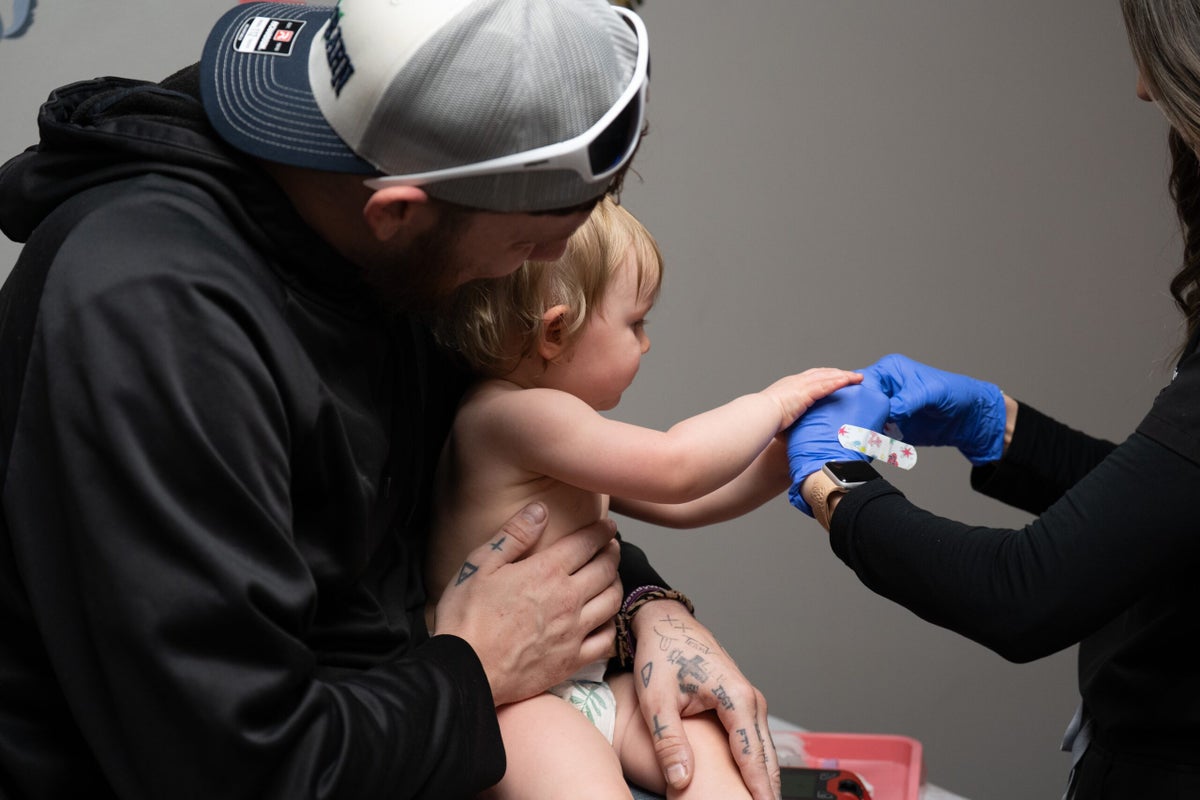
The death of an infant in Grant County last week, linked to the ongoing measles outbreak, serves as a stark reminder of the dangers facing vulnerable children in Wisconsin. As confirmed cases surge to 477 across 15 counties—the highest number in over three decades—state health officials are now advising parents of infants at risk of exposure to consider early vaccination, a departure from standard protocol. This outbreak, and the tragic loss of a young life, underscores the fragility of public health and the importance of community-wide commitment to preventative measures.
The Wisconsin Department of Health Services (DHS) issued guidance on November 3 recommending that infants aged 6 to 11 months receive the measles, mumps, and rubella (MMR) vaccine if they are likely to be exposed to measles. While the standard age for the first MMR dose is between 12 and 15 months, the Centers for Disease Control and Prevention (CDC) allows for administration as early as 6 months in situations like this outbreak. The state has now recorded 477 confirmed measles cases across 15 counties, with the majority concentrated in Grant and Lafayette counties in southwestern Wisconsin. This marks the highest number of cases seen in Wisconsin since 1990. According to DHS, the outbreak is directly linked to low vaccination rates, placing Wisconsin third in the nation for measles vaccination rates.
The recent measles-associated death is the first in Wisconsin since 1990, highlighting the severity of the disease and its potential for serious complications. Measles is exceptionally contagious, spreading rapidly among those who lack immunity. Dr. Ryan Westergaard, chief medical officer and state epidemiologist for communicable diseases at DHS, explained to WPR’s “Wisconsin Today” that while early vaccination isn’t universally recommended due to reduced effectiveness, “compared to no protection at all, it makes a lot of sense to give it at a younger age.” The Marathon County Health Department recently announced a possible public measles exposure at the Marshfield Medical Center’s Weston emergency department, further demonstrating the outbreak's reach beyond the southwest corner of the state. Marshfield Medical Center is a regional healthcare provider.
Kessa Klaas, the health officer for Grant County, noted that her office has been fielding daily calls from concerned parents seeking vaccination. “We have been getting calls, if not daily, I would say every other day,” she stated. Klaas emphasized that many parents’ hesitancy isn't rooted in vaccine skepticism, but rather a lack of familiarity with measles due to its previous elimination. “We’ve never seen measles, so it’s something new,” Klaas said. “I don’t necessarily think that they’re vaccine-hesitant, or that people are not getting it because of that reason. I feel like it’s more we just haven’t seen it.” The DHS is urging individuals who suspect they or their family members may have measles to contact their healthcare provider by phone before seeking treatment, a precaution to prevent further spread. Grant County Health Department is working to contain the spread.
The outbreak has understandably sparked concern among parents and healthcare providers in affected areas. Klaas's office is deploying nurses into the community to administer MMR vaccines, responding to the increased demand for immunization. She observed that many parents’ hesitancy isn't rooted in vaccine skepticism, but rather a lack of familiarity with measles due to its previous elimination. The Shawano-Menominee Counties Health Department also reported a measles case, highlighting the outbreak’s expansion beyond the initial epicenter. Shawano County Health Department is monitoring the situation.
What People Said
Dr. Westergaard believes that Wisconsin’s current outbreak can be contained and that measles can again be virtually eradicated. “I’m very confident we can get back to where we were before by getting out and strengthening all those systems of care,” he said. Wisconsin health officials are encouraging people to check their vaccination records using the Wisconsin Immunization Registry. If you believe you or someone in your family has measles, Westergaard said to check your vaccination records and then reach out to your health provider by phone. “This is a unique case where we don’t want to just show up at the clinic or show up at the emergency department, but call first,” he said.
The outbreak has raised local awareness around the importance of the measles vaccine. Kessa Klaas, the health officer for Grant County, said her office is sending nurses into the community to administer MMR vaccines. “We have been getting calls, if not daily, I would say every other day,” Klaas said. “We have a nurse out same-day to provide that vaccine in the home or wherever that person feels most comfortable.”
She noted that many young parents are unfamiliar with the importance of the measles vaccine because the disease was declared 'eliminated' from the United States in 2000. The outbreak is spreading due to low vaccination rates, with Wisconsin having the third-lowest measles vaccination rate in the country. This is the highest number of cases seen in more than three decades, according to the state health department.
The measles outbreak in Wisconsin isn't just a public health crisis; it’s a reflection of a deeper societal challenge. While the immediate focus is rightly on containing the spread and protecting vulnerable infants, we need to ask ourselves why vaccination rates have declined. It's not simply about misinformation, though that plays a role. It's about a growing distrust of institutions, a questioning of authority, and sometimes, a disconnect from the shared responsibility we have to protect one another, especially the most vulnerable. This outbreak should be a wake-up call for all of us – a reminder that individual choices have consequences for the entire community. We need to support families in their efforts to prioritize health and well-being, ensuring that children receive the care and guidance they need to thrive. Strong marriages, intact families, and a commitment to faith are essential for building resilient communities capable of facing challenges like this.
The situation demands a renewed focus on clear communication, accessible information, and compassionate engagement with families who may have questions or concerns about vaccination. It also requires a recognition that public health is not just a matter of individual choice, but a shared responsibility. As we move forward, let’s prioritize building trust, fostering understanding, and working together to create a healthier future for all Wisconsinites.
The Wisconsin Department of Health Services provides resources and information on measles and other vaccine-preventable diseases. Wisconsin DHS, Centers for Disease Control and Prevention (CDC), and Wisconsin Immunization Registry offer additional information.
By Katherine Langford

By Katherine Langford

By Marcus Chen

By Katherine Langford