Community
Mandela Barnes sues Milwaukee Journal Sentinel for defamation
By Marcus Chen
Advertisement · Why this ad?
Marcus manages the day-to-day editorial workflow across all brands, coordinating coverage assignments and ensuring editorial standards are met. He previously served as city editor at the Pioneer Press and holds a degree in Political Science from Carleton College.
More from Marcus →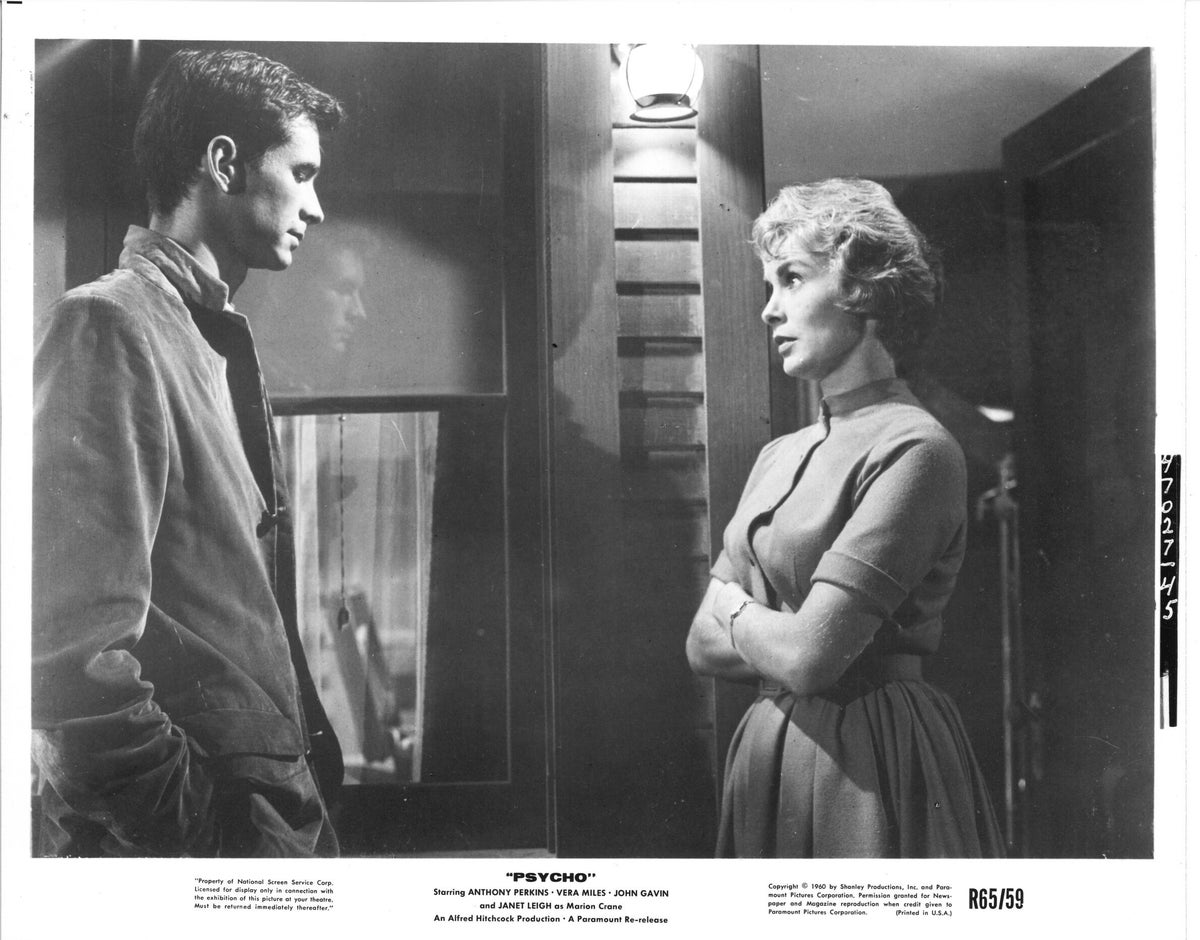
The unsettling image of Norman Bates, wielding a knife in a shower stall, is etched into the collective consciousness. But few realize the seeds of that horror were sown not in Hollywood, but in the heart of Wisconsin. Robert Bloch, the brilliant mind behind “Psycho,” spent much of his life in our state, and his experiences here profoundly shaped his chilling tales. Understanding that connection illuminates not only the origin of a horror legend but also a fascinating chapter in Wisconsin’s cultural history.
On WPR’s “Wisconsin Today,” English professor Bill Gillard, author of the new biography “Psycho Century: Robert Bloch, American Horror Master,” shed light on Bloch’s Wisconsin roots. Gillard’s work traces Bloch’s career, from his childhood in Milwaukee to his time living in Weyauwega, where he conceived the novel that would catapult him to international fame. This isn't just a story about a famous author; it's a story about how a place—Wisconsin—could nurture such dark creativity.
Bloch’s family relocated to Milwaukee from Chicago when he was young, and his mother found employment at the Jewish Settlement House. It was there, as a young boy, that Bloch’s fascination with the macabre began. Gillard recounted a pivotal moment when Bloch, given money for a movie, chose to see “The Phantom of the Opera” with Lon Chaney. “The movie he picked was ‘Phantom of the Opera’ with Lon Chaney, which terrified Bloch,” Gillard explained. “Bloch was sitting there in the dark all by himself, this small child watching the most frightening movie ever created. Bloch said he didn’t sleep for a month after that … his DNA was altered by seeing that film.”
A year later, a chance encounter with a magazine further solidified his interest in the genre. His aunt offered him any magazine he wanted, and the ten-year-old Bloch selected an October 1927 edition of “Weird Tales,” featuring a story by H.P. Lovecraft. “He picked the October 1927 edition of “Weird Tales,” which surprised Aunt Lil,” Gillard recalled. The story, “Pickman’s Model,” ignited Bloch’s imagination and set him on a path toward becoming a master of horror.
Inspired by Lovecraft, Bloch quickly developed his own writing skills. He joined the literary society at Lincoln High School, publishing his first story shortly after graduation and amassing seven more within a year. He also found camaraderie in a local writing group called the Milwaukee Fictioneers, alongside science fiction author Fredric Brown. These early experiences fostered his talent and provided a supportive community for his burgeoning creativity.
Bloch’s connection with Lovecraft extended beyond admiration, evolving into a playful, literary rivalry. They corresponded regularly, and even engaged in a unique form of artistic sparring. “Bloch wrote a story that featured a kind of a reclusive writer and researcher… who met a kind of explosive and very well wrought demise,” Gillard recounted. “And then Lovecraft responded in kind. It was the only story that Lovecraft ever dedicated to anyone, and it was dedicated to Robert Bloch.” The dedication even included Bloch’s Milwaukee address, a testament to their unusual friendship.
Bloch’s move to Weyauwega, to be near his wife’s family during a health crisis, proved to be a crucial turning point. It was in this seemingly quiet small town that the unsettling ideas for “Psycho” began to take shape. Bloch initially believed he understood the rhythms and secrets of small-town life. “Bloch thought he knew after a few years what small towns were all about,” Gillard said. However, reports of murders and grave-robbing in Plainfield, a nearby town, shattered that perception.
While often linked to the infamous crimes of Ed Gein, Gillard clarified that Bloch’s novel was inspired by, but not directly based on, Gein’s actions. “Bloch couldn’t understand how nobody knew,” Gillard said. “How could somebody like Ed Gein do this kind of stuff and live in a small town?” This question drove Bloch to explore the psychology of secrecy and the potential for darkness lurking beneath the surface of even the most idyllic communities.
The inspiration for Norman Bates and the Bates Motel came from a real-life landmark: the Lakeshore Motel, visible from Bloch’s home in Weyauwega. “From Route 10 as you’re passing by Weyauwega today, if you look closely, you’ll still see a sign there just north of the highway for the Lakeshore Motel,” Gillard said. The motel’s physical presence, combined with Bloch’s observations about small-town dynamics, helped him craft the iconic setting for his psychological thriller.
“Psycho” marked a significant shift in Bloch’s writing, moving him from the realm of cosmic horror to a focus on the darker aspects of human nature. Earlier in his career, Bloch’s work was heavily influenced by H.P. Lovecraft’s tales of otherworldly entities. However, the experience of World War II profoundly impacted his perspective. “He had been writing about these horrors coming from elsewhere, other dimensions, ghosts, monsters,” Gillard explained. “But he realized that these monsters, they’re nothing compared to what humans are capable of doing to each other, and that profoundly affected him.”
It's often difficult to reconcile the creator of terrifying stories with a seemingly ordinary person. In Bloch’s case, Gillard’s research revealed a man of kindness and generosity. “There are letters from high school students who say, ‘Dear Mr. Bloch, we’re starting a literary magazine, and we’re wondering if you want to submit a story,’ Gillard said. “And Bloch would just write on the letter, ‘Hey, good luck with the magazine, and here’s a story.’” This anecdote paints a picture of a man who used his talent to inspire and support others, even as he explored the darkest corners of the human psyche.
The story of Robert Bloch’s Wisconsin years is more than just a fascinating bit of literary history; it offers a window into the resilience of the human spirit and the importance of community. Bloch’s ability to find horror in the seemingly ordinary—a small town, a roadside motel—reminds us that darkness can exist anywhere, even in places we consider safe. It’s a sobering thought, but also a call to vigilance and empathy. The stability of families and the strength of communities are vital bulwarks against the forces that can lead to such darkness. Bloch’s story should prompt us to consider the importance of fostering connections, offering support, and recognizing the signs of distress in our neighbors. His legacy serves as a reminder that even the most brilliant minds can be shaped by their surroundings, and that even in the most peaceful places, shadows can lurk.
Bloch’s legacy continues to resonate today, influencing countless writers and filmmakers. His work serves as a reminder of the power of storytelling to explore the complexities of the human condition. Readers interested in learning more about Bloch’s life and work can find Bill Gillard’s biography, “Psycho Century: Robert Bloch, American Horror Master,” at local bookstores and online. The story of Bloch's Wisconsin connection provides a unique lens through which to appreciate the enduring appeal of his chilling tales and the importance of understanding the forces that shape our communities. Residents can also explore the City of Wauwatosa's website for information on local events and resources, and the Milwaukee County website for county-wide programs.
The story of Robert Bloch’s Wisconsin connection is a testament to the power of place and the enduring appeal of a good story. It’s a reminder that even in the most ordinary settings, extraordinary things can happen, and that sometimes, the most terrifying monsters are the ones we create ourselves.
Resources: Wisconsin Public Radio, University of Wisconsin-Oshkosh, Jewish Settlement House, Milwaukee County Related Stories: New horror film spins Wisconsin tropes into a nightmare, New documentary explores how one Wisconsin Northwoods town was built to last, Horror film ‘Backrooms’ inspired by a meme born in Oshkosh Image Credits: Wisconsin Public RadioBy Marcus Chen

By Marcus Chen

By Marcus Chen
By Katherine Langford